This continuing education course is developed by Magnus Langseth, Professor Em., and offered in collaboration with the Norwegian Steel Association and DYMAT. DYMAT is a European research association in the field of dynamic behaviour of materials and its applications.

Introduction
Structures are increasingly exposed to unintentional extreme loads. There is a growing need to protect critical infrastructure facilities and systems against a variety of threats. Examples are terrorist acts, industrial accidents both onshore and offshore as well as buildings, infrastructure and energy supply systems exposed to extreme loads caused by climate change. Transportation of dangerous goods, road infrastructure, and car accidents also fall within these concerns. Addressing such challenges underpins the necessity for robust structures or systems capable of withstanding defined threats, accidents, and hazards.
Loading environments associated with extreme events are highly energetic and typically of much shorter duration compared to conventional structural loadings. Consequently, both the industry and public enterprises require skilled designers to ensure reliable and robust design solutions. Fundamental understanding of structural and material behaviour under extreme loading conditions is therefore essential.
Objective
This course aims to provide foundational knowledge on how steel and aluminium structures
respond to impact and blast loads, using basic examples. This understanding supports
structural design for extreme loads, assist in simplified calculations during the early design
phases, and support the evaluation of numerical simulation results.
Participants
This course is designed for professionals in defence, protection, civil, mechanical, materials,
naval, ocean, transportation, and related engineering fields that address impact, blast, and
high-rate loading. Participants with a background in mechanical or structural engineering will
benefit most from the specialised topics covered.
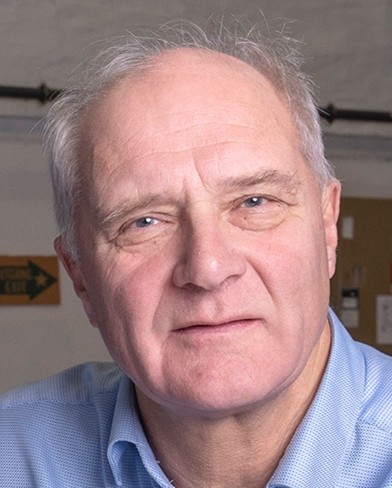
Profile of Professor Em. Magnus Langseth
Magnus Langseth is professor emeritus at NTNU in Trondheim, Norway, with research focused on the impact and crashworthiness of aluminium and steel structures. He has also studied point connectors, lightweight ballistic protection, and structural response under blast loading. Langseth directed SFI CASA (2015–2023) and SIMLab (2007–2014) and is Editor-in-Chief of the International Journal of Impact Engineering. He is a member of the Royal Norwegian Society of Sciences and Letters and the Norwegian Academy of Technological Sciences as well as a member of the DYMAT Governing Board. His honours include the «Médaille Albert Portevin» (SF2M, 2005) and an Honorary Doctorate from Université de Valenciennes (2009).
Course Outline
0830-0900
- Introduction
This section covers the overall course outline and provides an introduction to impact
mechanics.
0900-1000
- Impact Dynamics – Elastic and plastic impact and wave propagation
The classical theory of impact mechanics, called stereomechanics, is presented. It is
based primarily on the impulse-momentum law of rigid bodies and involves a
minimum of mathematical difficulties in its formulation. Both elastic and plastic
impacts are presented, and a definition of a rigid body is given along with uniaxial
wave propagation. The lectures are supplemented with illustrative examples where
the difference between wave propagation analysis and a stereomechanical approach
is highlighted.
1000-1015: Break
1015-1200
- Impact Loading on Beams
Cantilevers, simply supported, and clamped aluminium beams are investigated to
understand their impact response. The principles discussed are applicable to steel
beams as well, providing a broader context for structural design. The study considers
the effects of cross-section geometry, impacting mass and velocity, material
properties, and welding, all of which contribute to the overall response of the beam
during impact. Force-displacement curves and energy absorption are derived using
the concepts of virtual complementary work or virtual forces. Moment-curvature
relationships for the cross sections with nonlinear material curves are generated. All
cross-sections analysed are classified as either class 1 or class 2. The absorption of
energy in these beams is constrained by material failure on the tension side and local
plastic buckling on the compression side. The development of buckling stress is based
on the deformation theory of plasticity. Material failure is determined by assuming
plane strain conditions in the tension flange (where diffuse and localized necking
coincide). The transient phase during impact loading is addressed using the Mode
Approximation Technique. This approach facilitates the energy absorption in the
beam during wave propagation. All methods are integrated into the Plastic Capacity
(PLCA) programme. This programme is validated through analytical methods sourced
from literature and numerical simulations, ensuring the reliability of the results. The
PLCA programme effectively demonstrates how variations in input parameters, such
as material properties, welding and impact conditions, influence the response of
beams. Local buckling of plates and the effects of welding are also considered, with
reference to Eurocode 9 (EC9).
1200-1300: Lunch
1300-1345
- Energy Absorption in Beams with Partial End Fixity
This part covers energy absorption in beams with partial end fixity subjected to a
concentrated load at midspan. It begins by formulating fixed support conditions, then
presents the yield criterion for rectangular hollow sections. The force-displacement
curve for a beam with elastic end supports is calculated using Green Strain and
concentrated plasticity. References are given to the NOSOK design code
(RECOMMENDED PRACTICE DNV-RP-C204).
1345-1445
- Pressure and blast loading of beams
Blast and pressure loading of beams are investigated by assuming a rigid, perfectly
plastic material. The blast load is represented by a triangle (maximum pressure at
time zero), whereas the pressure load has a rectangular shape. All loads have zero
risetime. Equilibrium equations are established using virtual velocities to determine
displacements and energy absorption across different deformation phases. It is
shown how the load magnitude has impact on the deformation mode and thus
energy absorption. For short duration loads with high intensity (treated as an
impulsive load), the response is calculated using conservation of angular momentum
and The Mode Approximation Technique.
1445-1500: Break
1500-1545
- Impact loading on plates
This part covers the impact behaviour of plates subjected to an impact from a blunt
ended projectile. The energy absorption in the transient and global mode phase is
presented, and it is shown how scaled test data are used to establish design
recommendations to prevent plugging. An analytical model is presented to calculate
the energy absorption in the global mode phase. Finally, comments on the NOSOK
design code (RECOMMENDED PRACTICE DNV-RP-C204) recommendations are given.
1545-1630
- Axial and Lateral Compression of Tubes
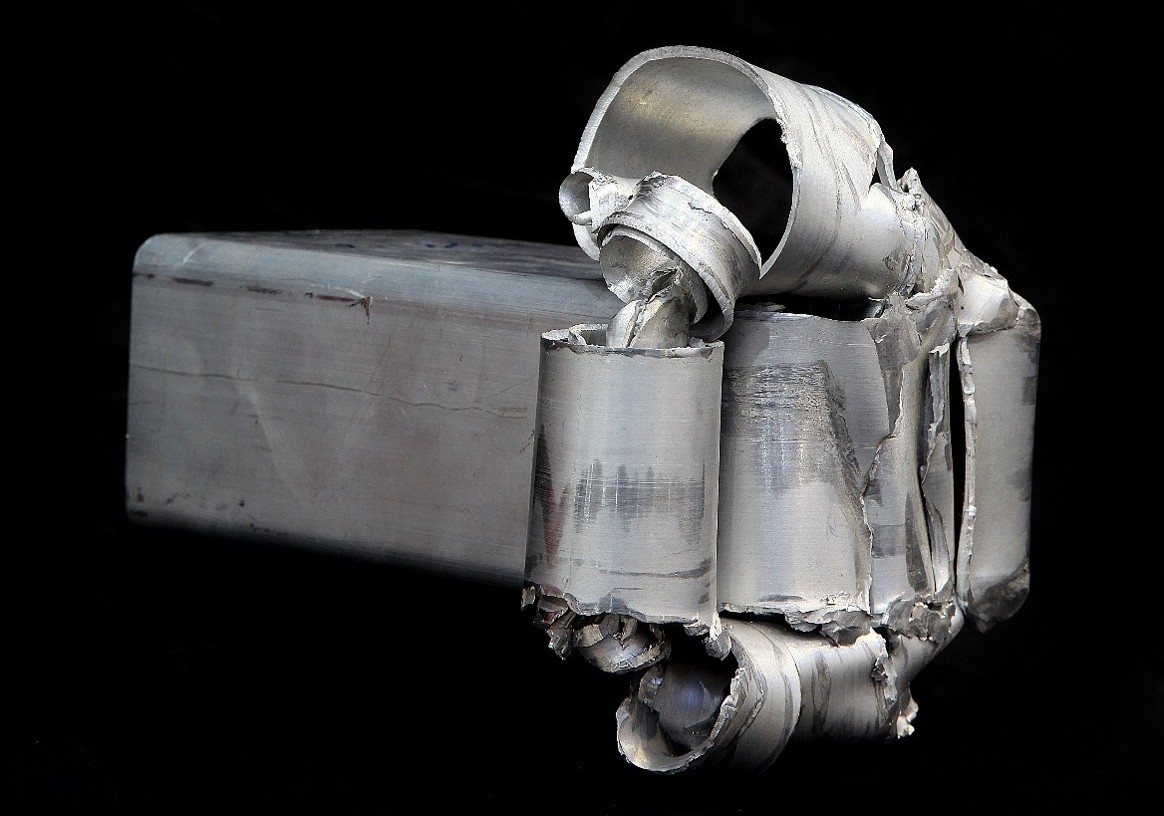
Both axial and lateral compression of tubes are addressed. Tubes subjected to axial
compression experience buckling and subsequent plastic folding. The influence of
impact velocity and foam filling are examined. Lateral compression is evaluated by
applying loads using either two rigid plates or two-line loads, with a discussion of the
behavioural differences between these loading methods.
1630-1715
- Structures Subjected to Impact from Rockfall, Avalanche and Debris Flow
This section illustrates three applications: the use of rigid body dynamics to solve
rockfall impact problems; the application of shock wave theory to determine the load
on a rigid barrier during avalanche impact; and the use of conservation of
momentum to determine loads from debris flows.
Literature
Parts 2, 3, 4 and 7 are covered in: M. Langseth Lecture notes and reports
on Impact and Energy Absorption.
Parts 5, 6, and 8: Copy of presentations.
Practical information
Time: Tuesday, November 17. 2026
Documents and tools provided (included with the course fee):
Technical compendium / Fagkompendium – digital format
Computer programme: PLastic CApacity (PLCA)
Copy of presentation
Venue: Thon Hotel Slottsparken, Oslo and with the opportunity to participate digitally via Teams
Participation fee:
7 900,- NOK for members in DYMAT, Norsk Stålforbund, NFS and YSN
10 200,- NOK for non-members
1 500,- NOK for students. Student identification must be provided. Digital participation via teams only
Quantity discount: -10% for a minimum of 3 participants from the same company when registering together. -20% for a minimum of 6 participants from the same company when registering together
Registration deadline: Thursday, November 12th, 16.00 pm
Administrasjon:
Norsk Stålforbund
e-post: post@stalforbund.com